Listening is a place to begin
In a sound-led practice, the changing tones of bowls and other instruments become part of the experience. Your attention will move around; returning to what you can hear is enough. There is no particular feeling you have to produce.
Find a comfortable position
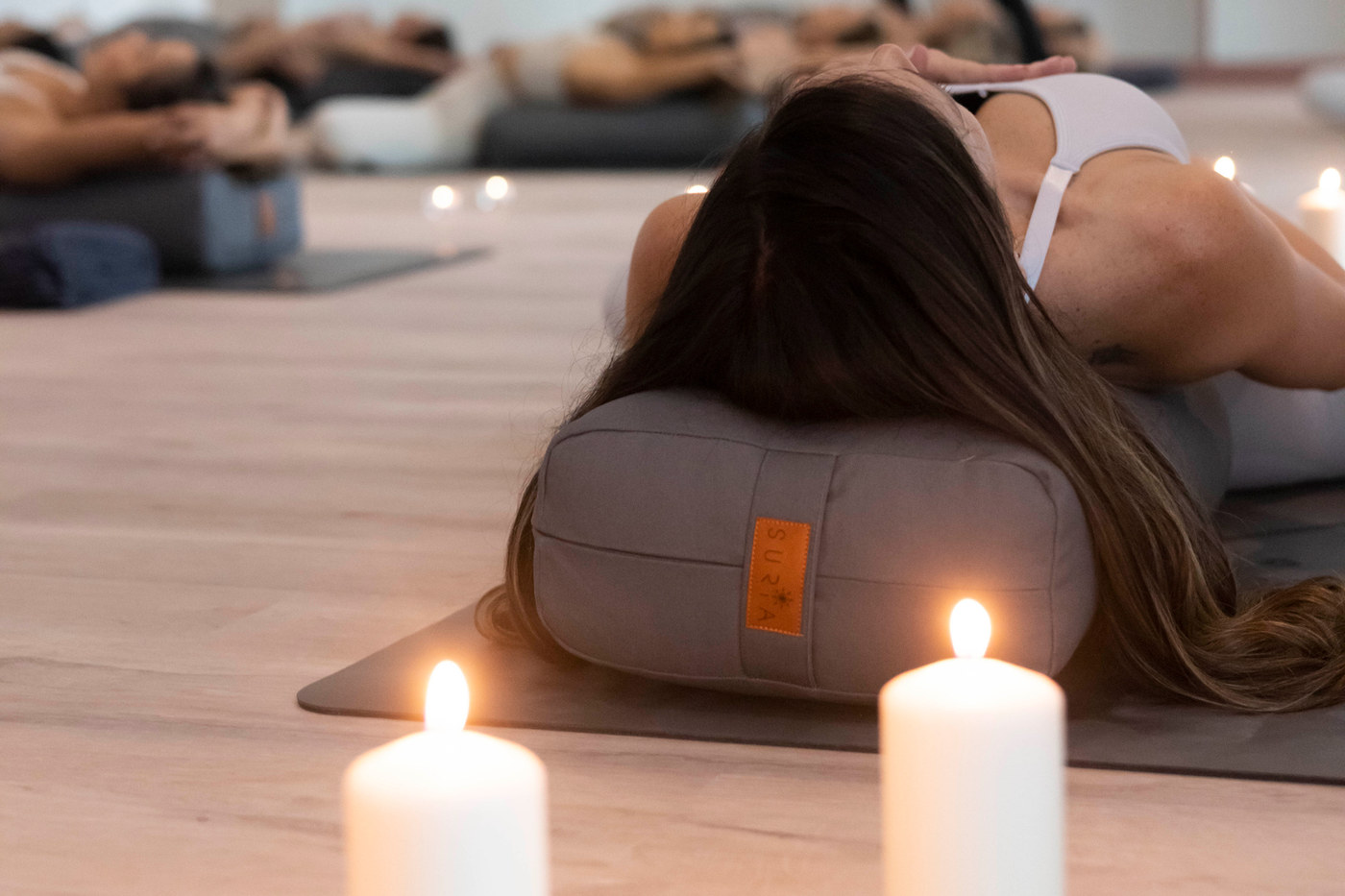
Supported postures, props and a light layer can make a quieter class more comfortable. Speak to the teacher about sitting or lying-down options. If sound is uncomfortable for you, discuss the format before joining.
Choose the experience you want
Akasa’s Sound Healing class pairs Yin-inspired holds with live sound. Restore & Meditate combines gentle stretches with guided practices and may include Yoga Nidra. A private sound massage is a separate one-to-one experience. Their individual pages explain these differences.